You're Still Showing Up.
The Number Is Moving.
Something Else Isn't.
Not a summary of what you just read. The part nobody in that doctor's office ever mentioned — and what happens when it keeps running.
You're doing everything they told you to do.
The medication. The oatmeal every morning. The fish oil that makes your playing partners take a step back on a warm day.
And at your last appointment, your doctor looked at the chart and said the words you've heard a dozen times now.
But your game isn't what it was.
Your distance is down. Your grip feels wrong by the back nine. You're riding the cart by the 12th hole when you used to walk 18 without thinking about it.
And when you mention it, you get the same answer.
You've accepted that answer. Most men do.
The medication is suppressing production. It's doing exactly what it was designed to do.
What nobody mentioned is the reabsorption loop.
Your liver packages cholesterol into bile, ships it to the intestine — and 95 percent of it gets reabsorbed and cycled back into your bloodstream. Every single day. While you take the medication. While you eat the oatmeal. While you walk five days a week.
The number on the chart looks exactly the way your doctor wants it to look.
The loop keeps running underneath.
That loop is the reason the back nine changed. The grip changed. The Saturday mornings changed.
The loop doesn't pause while you're managing the number. It runs. Every day. Whether the chart looks good or not.
The men who find this out from a cardiologist on a golf course are the lucky ones.
The men who find out later — find out differently.
Frank knows what that looks like. His father managed his numbers for eleven years.
He doesn't talk about how his father found out the loop was still running.
The video below explains the mechanism Ray spent two years researching after he retired from 31 years of cardiology.
He watched it before he tested anything on himself. He needed to understand it first.
There's a section — about twelve minutes in — where it shows what the loop looks like when it's broken versus when it keeps running.
Not described. Shown.
That's the part Frank watched at 1 AM. That's the part that made him bring the research to his doctor the next morning instead of waiting.
Watch it before you decide the numbers are enough.
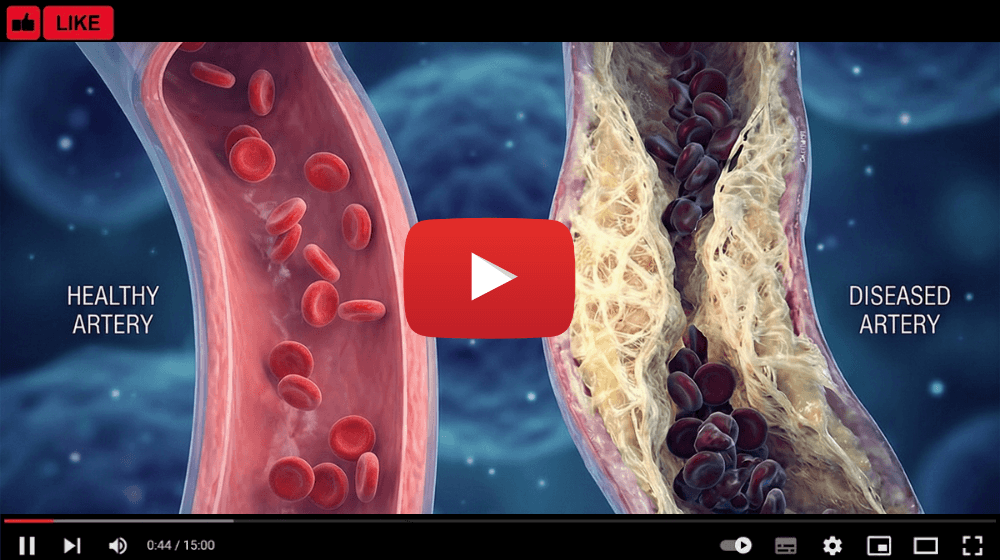
This is the part the chart doesn't show you.