I Taught Exercise Science for 25 Years. My Own Body Stopped Following the Rules — and My Doctor Had No Idea Why.
What a former PE teacher finally understood after three years of doing everything correctly and getting nowhere — and the one variable that changed everything.

Karen D., 52

I want to be honest with you about something before I say anything else.
I am the last person who should be writing this. I spent 25 years teaching teenagers how their bodies work — caloric balance, metabolic rate, what consistent movement does to the human body over time. I had taught it. I had lived it.
For three years after menopause, none of it worked for me.
I tracked everything. I walked every morning through a winter that gave me every reason not to. I ate 1,400 calories a day. My doctor looked at my chart and told me to keep doing what I was doing. I sat in my car in the parking lot for a long time after that appointment.
If you have sat in that parking lot — if you have brought the data, done the work, and been sent home with nothing — then you already know what I mean. That is who I am writing this for.
WHAT I FINALLY UNDERSTOOD
The programs didn't fail because you didn't try hard enough. They failed because they were built for a body you no longer have.
What actually changed after menopause — in plain language.
After menopause, two specific biological systems change. Every weight loss program designed before those systems changed was built on the assumption they were still running the way they ran before. They are not.
THE SCIENCE — SYSTEM 1
Your cellular metabolic switch
A protein called AMPK — sometimes described as the master regulator of cellular energy — determines whether your cells burn stored energy or conserve it. When AMPK activity drops, which happens progressively through menopause, your cells shift to conservation mode. They store more. They burn less. And they do this independently of how much you eat or exercise. The caloric deficit you are creating through discipline is being partially offset by your cells doing the opposite. You are pressing the accelerator and the brake at the same time.
THE SCIENCE — SYSTEM 2
Your appetite-signaling pathway
Your gut produces hormones that tell your brain "enough." These are the signals that make the difference between someone who naturally stops eating when satisfied and someone who fights hunger every single evening. Production drops significantly after menopause. The persistent hunger is not weakness. It is a system running below specification.
Here is what matters: both systems are targetable. They are the exact systems that billion-dollar pharmaceutical companies target with their injectable weight loss drugs. That is why those drugs work for post-menopausal women when calorie restriction alone stops working. The drugs reach the right systems. Diet alone cannot.

Why the patches you've already tried felt like an expensive sticker.
I want to address something directly. If you have tried weight loss patches before and felt nothing — your skepticism is probably correct about most of them.
Here is the specific reason most berberine patches don't work.
Delivering a compound through the skin is not simply a matter of putting it on an adhesive patch. For a molecule to cross the outer barrier of the skin, the formulation has to be specifically engineered for transdermal absorption. Most patch products use the same berberine powder that goes into capsules, apply it to adhesive, and call it transdermal delivery. That is not transdermal delivery. That is berberine sitting on top of your skin.
~5%
Estimated oral Berberine that reaches systemic circulation after digestion
8hrs
Steady transdermal delivery — consistent, not peak-and-crash
Actual transdermal delivery — the kind used for nicotine patches, hormone replacement patches, and several pharmaceutical drugs — requires the right molecular weight, the right carrier compounds, the right release mechanism. When engineered correctly, the compound enters the bloodstream directly, bypasses the digestive system entirely, and maintains a steady plasma level throughout the day.
That is what changes things. Not the concept. The engineering.
Purisaki is engineered around actual transdermal delivery — not the marketing claim. 30-day guarantee means you test it, not trust it.
$26.99/month · Full refund if it doesn't work
Why I held a no-policy for over a year — and what broke it.
After my doctor's appointment, I developed what I can only describe as a clean, logical policy. The policy was no. Not "let me research this further." Not "maybe under the right circumstances." Just no.
I had tried enough things to see a clear pattern. The pattern said nothing works. Continuing to spend money on things that don't work is not optimism. It is a mistake.
I held that policy for fourteen months.
What broke it was not enthusiasm. It was a specific argument I could not immediately counter. It came from Barbara — 59, a retired nurse, someone whose professional training made her equally resistant to health claims that could not be mechanistically explained. She had done the research. She understood the engineering distinction I described above. She had been using a specific berberine patch for six weeks. And she said, with characteristic bluntness:
"I hate that this is working. That's the most honest thing I can say."
That sentence got through fourteen months of no. Because Barbara does not say things she does not mean.
The product is called Purisaki Berberine Patches. Berberine, Fucoxanthin, Green Tea Extract, Pomegranate Oil, African Mango, and B-vitamins — delivered through the skin, bypassing the digestive destruction that makes oral berberine so inconsistent. Application takes under ten seconds. A patch, applied each morning. No protocol. No timing. No doses to manage throughout the day.
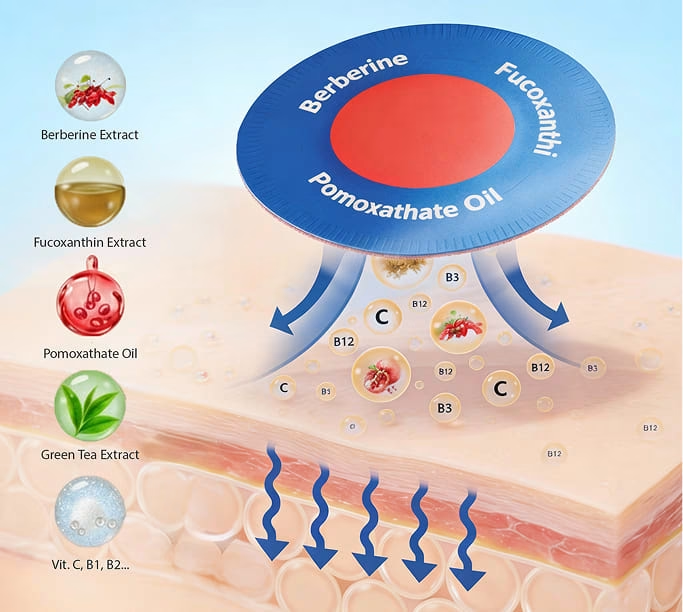
What I observed — precisely, because I am someone who notes things precisely.
I put the first patch on a Monday morning with the specific internal posture of someone running an experiment they expect to disprove. I want to be specific about what I observed, because vague testimonials are exactly the kind of evidence I distrust.
I was sitting at my desk in the evening and became aware that I was simply sitting at my desk. Not negotiating with myself about the kitchen. Not calculating what I had left for the day. The thought that had been there every evening at that time — reliably, for years — was not there in the same way. I noted it. I did not tell anyone.
Quieter again. The background hunger I had managed through discipline for three years was measurably less loud. I did not change my diet, my exercise, my coffee intake, or any other variable. The patch was the only change.
I had the specific experience of eating dinner and not thinking about food for the rest of the evening. I registered this as a fact and kept going.
My clothes fit differently. My body composition had shifted in a direction I had not been able to produce through years of effort. The program my colleague had followed — the one that worked for her and produced nothing for me — I tried a modified version again. This time, my body responded.
The objections I ran through — and where they led.
I am a PE teacher. I am trained to question claims about bodies. I ran through every objection before I agreed to try this.
There's no clinical proof specific to this product.
Correct. The evidence is mechanistic — built from established pharmacokinetics and berberine research — not product-specific. You are being asked to reason from the science, not take the brand's word. That is a different kind of ask.
Even if the mechanism works, it might not work for me specifically.
Also correct. Individual response varies. Which is why the product comes with a 30-day money-back guarantee. You are not being asked to believe. You are being asked to run the experiment. If the experiment fails, you get your money back.
I've already tried patches. They did nothing.
The distinction between patches that place berberine on the skin versus patches engineered for actual transdermal absorption is the reason. Most patches on the market fall in the first category. The engineering matters more than the concept.
At the end of this exercise, I had one thing left. Not skepticism. Inertia. And inertia is not a reason.
What other skeptics found.
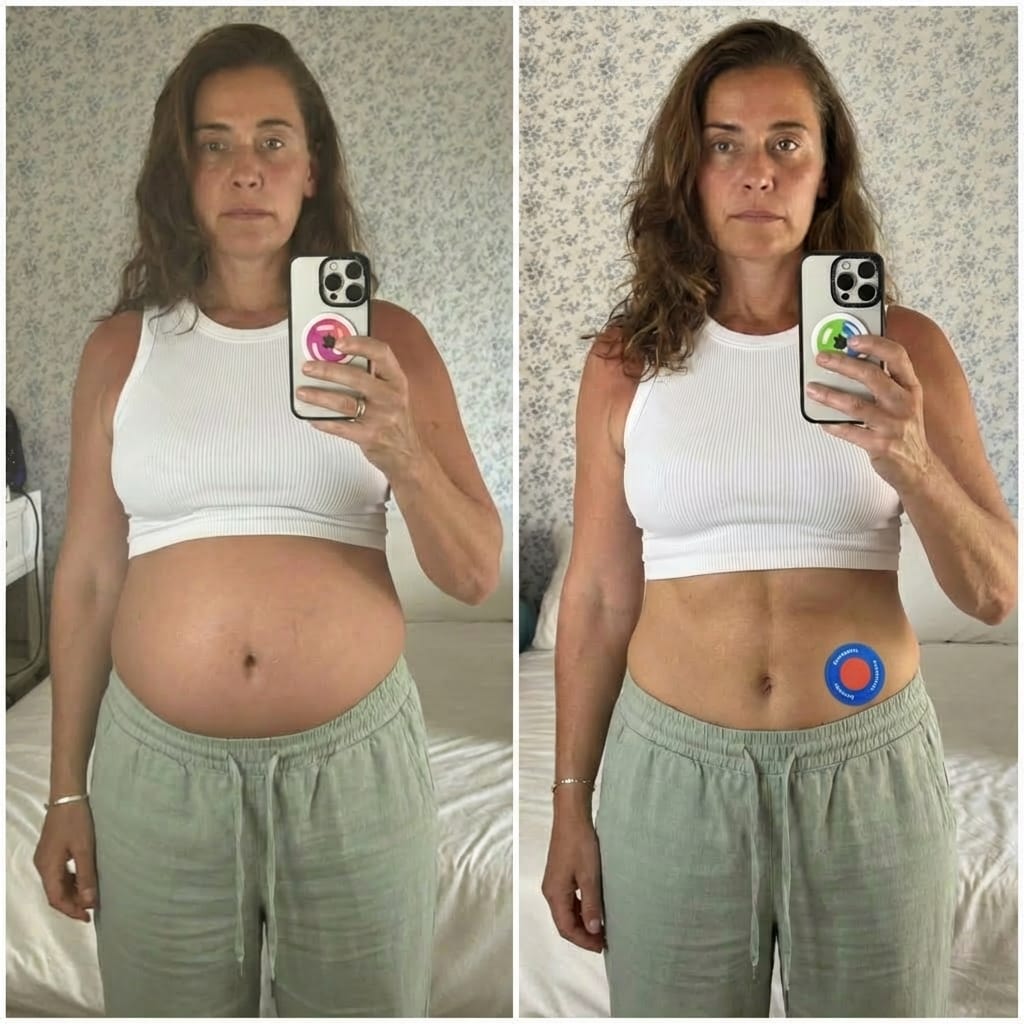
Evening cravings were always my biggest struggle. After the first week, I noticed I was not reaching for snacks the same way. I did not change my diet. I did not add workouts. The evenings just got quieter. My husband noticed before I said anything — he said I seemed less tired. That was exactly the right word for it.
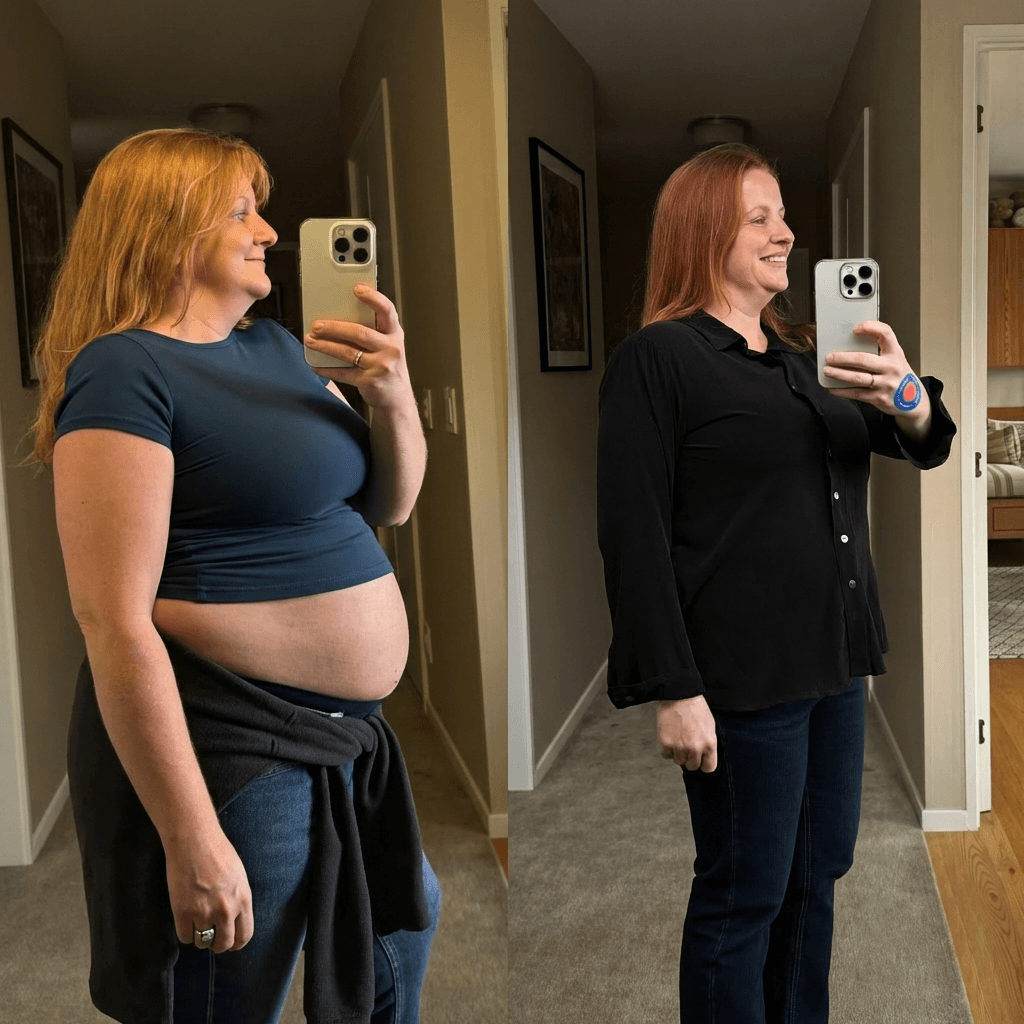
I was hesitant because I had been burned before. Detox teas, fat burners, two different patch brands that fell off within an hour. This one stayed on all day. No rash, no irritation. By week three I was sitting on the couch one evening and realized I had not thought about the kitchen in hours. That absence was the first thing that felt different.
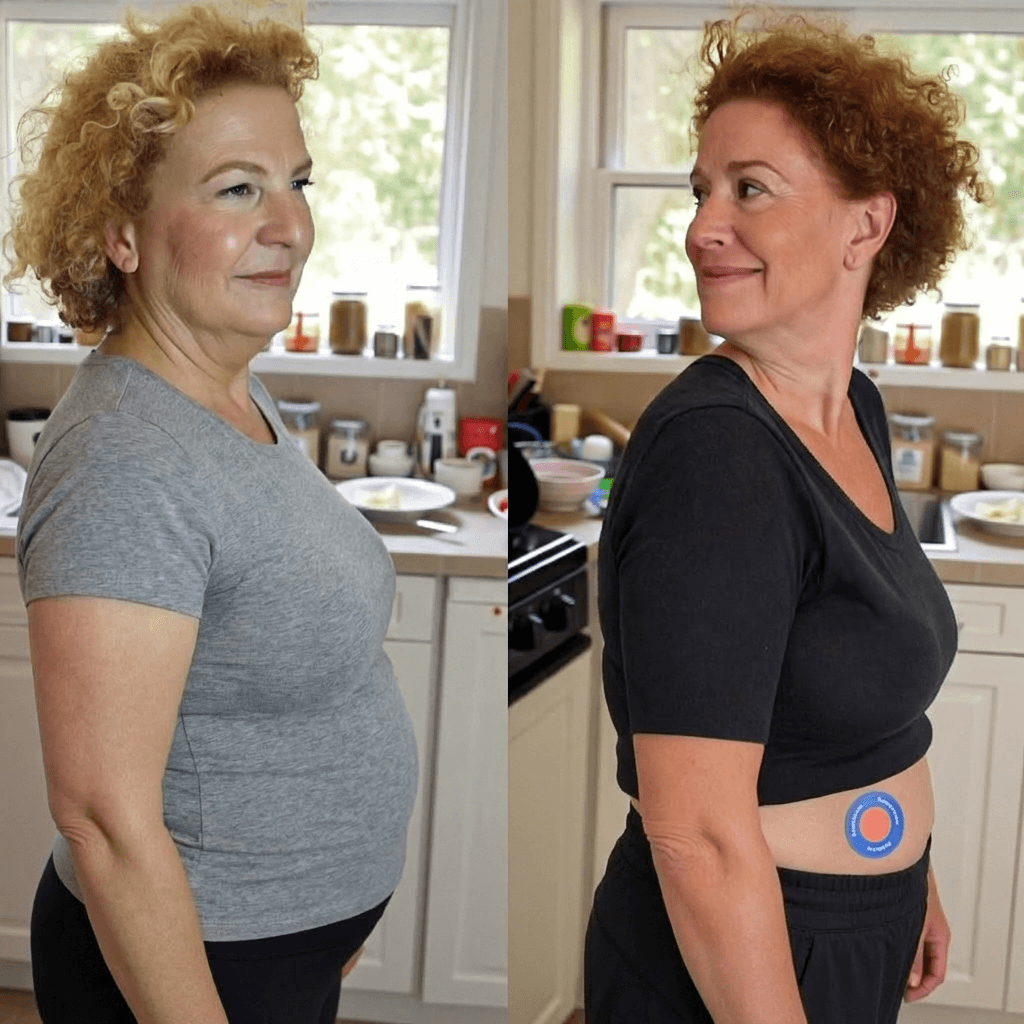
What surprised me was the steadiness. No jittery feeling like the fat burners. No stomach problems like the pills. I just wore it and went about my day. By week five my appetite felt like it belonged to me again instead of running the show. My clothes started fitting differently without me trying to make that happen.
None of these are people who believe things easily. That is, in my view, the relevant data point.
"You're not being asked to believe. You're being asked to test." — 30-day full refund if it doesn't work.
$26.99/month · No subscription · 30-day guarantee
The numbers. Plainly.
$1,200
$26.99
30-Day Money-Back Guarantee. If you don't notice a meaningful difference in the first month, return the patches for a full refund. No subscription. No automatic billing. No complicated cancellation.
The cost of another 14 months of refusing to try something that might work is harder to calculate than $26.99.
If you've tried everything and concluded that nothing works for your body — consider whether your conclusion is based on testing the right variable. The programs you tried were probably well-designed for a body running different hormonal instructions than yours. The failure was architectural, not personal. Purisaki is on sale right now. The 30-day guarantee means you're not being asked to believe. You're being asked to test. That's a reasonable ask.
30-day money-back guarantee · No subscription required
Copyright © 2026 All Rights Reserved.
This site is not a part of the Facebook website or Facebook Inc.
Additionally, this site is NOT endorsed by Facebook in any way.
FACEBOOK is a trademark of FACEBOOK, Inc.
Create Your Free Account